Crack repair
Diagonal cracks off door and window corners, split seams and ceiling lines, cut out and rebuilt so they stay closed longer.
Wall and ceiling crack repairHoward County, Texas
Most wall damage is smaller than it looks. A crack over a bedroom door, a doorknob hole, a tea-colored ring overhead: each one has a right-sized fix, and some of them you can handle yourself. We tell you which is which, then do the ones worth hiring out.
Serving Big Spring, the Howard County seat, and the towns along I-20 and the farm roads around it.Open 7 days, 7am–9pm
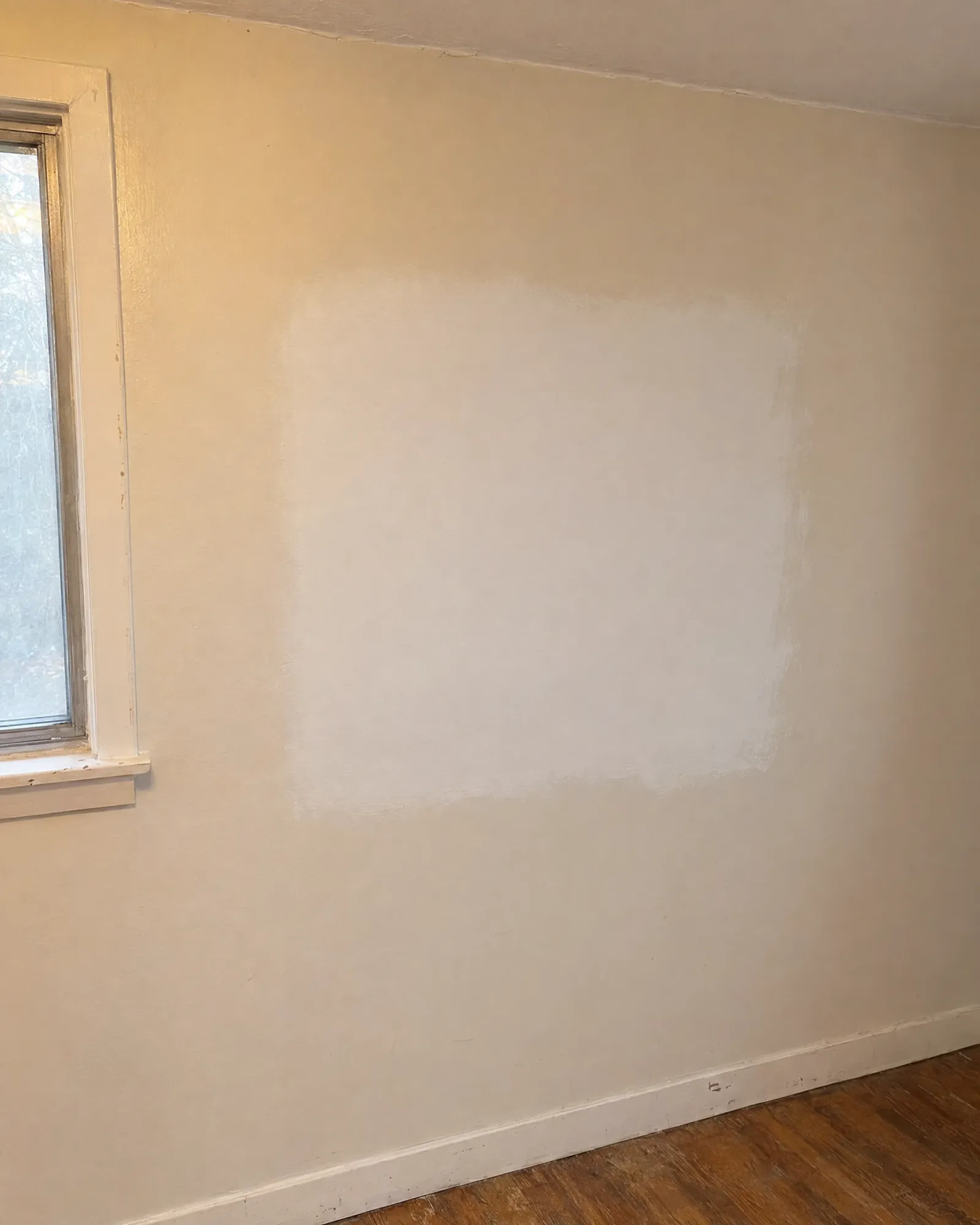
Nearly every call we get in town lands in one of four groups. Each one gets a page covering the local causes and the questions people ask before booking. The steps from first photo to painted wall are laid out on how our repair visits run.
Diagonal cracks off door and window corners, split seams and ceiling lines, cut out and rebuilt so they stay closed longer.
Wall and ceiling crack repairOrange peel, knockdown and popcorn blended into the surrounding wall or ceiling so a patch stops announcing itself.
Orange peel and knockdown matchingDoorknob punches, anchor holes, furniture dents and crushed corners, patched with the right backing for the size.
Patching holes and dentsStained, soft or sagging board after a roof leak or a burst line, cut back to dry framing and rebuilt.
Replacing water-damaged drywallPlenty of wall damage is not worth a service call. Here is where the line usually falls.
Nail pops, small anchor holes and a hairline at a taped seam are honest homeowner jobs. A tub of lightweight spackle, a flexible putty knife, a sanding sponge and a quart of matching paint is enough. Two thin coats beat one thick one. Expect the spot to show a little in raking light; on a textured wall it will show more.
Holes from a fist to a dinner plate are doable with a patch kit if you have patience. The hard part is not the hole. It is the texture over it. If the wall is smooth, try it. If it carries knockdown or orange peel, a hand-dabbed blend usually looks worse than the hole did.
A ceiling that dips, board that feels soft, a crack that came back after you filled it, or damage bigger than a sheet of paper. These need cutting, backing and spray texture. It is still rarely a big job, but it is a job for the right tools.
Most interior walls here are half-inch gypsum board on wood studs. A patch uses the same thickness so the face sits flush.
Ceilings carry more weight per square foot of compound and texture. Sag-resistant board is the replacement of choice when a section comes down.
Powder you mix with water. It hardens by chemical set rather than drying, shrinks less and is what goes into cracks and deep fills.
Premixed and easy to sand. It is the last thin coat before texture, never the filler for a crack that moves.
A fine spatter sprayed thin, like the skin of the fruit. Common on walls in houses built or redone in the last few decades.
Heavier splatter, troweled down with a broad blade a few minutes after spraying. Flat islands with low valleys between them.
Acoustic ceiling texture from older builds. It can contain asbestos in homes of that era, so we ask about testing before anyone scrapes it.
No texture at all. The least forgiving surface to patch, because every ridge shows once light rakes across it.
Matching works in that order: same board, then a set coat, then a topping coat feathered wide, then texture sprayed with a hopper gun at the same pressure and dilution as the original, then primer and paint. Skipping the primer is why so many good patches still ghost through a fresh coat. The texture matching page covers the spray side in detail.
Choose the closest match and the contact form opens with that problem already filled in. A sentence or two and a photo is all we need to tell you the likely scope.
Inspectors, buyers and listing photographers notice three things: holes, stains and patches that are a different sheen from the wall around them. Fix those first. Hairline seam cracks and a few nail pops can usually stay, because they read as an ordinary lived-in house.
Book the drywall at least a few days ahead of the painter. Compound has to cure, primer has to dry, and texture needs a day before it takes a roller well. If the painter is already set, tell us the date and we will plan the repair backward from it.
Rental owners will find more in the landlord and owner guides.
When water or an impact damages a wall, a clear record helps whoever you report it to, whether that is an insurance adjuster or a property manager. Photograph the damage wide and close, with something in the frame for scale. Note the date you first saw it, where the water came from if you know, and what you did to stop it.
Keep any wet board we remove until the adjuster says it can go. We can write up what we found behind the wall and what we replaced. What your policy or lease covers is between you and them; we only describe the wall.
Big Spring. Neighborhoods on both sides of I-20, from the older streets near downtown to the newer edges of town.
Coahoma. Ten miles east on the interstate, close enough for small jobs.
Sand Springs. The Howard County community along I-20 just outside the city.
Forsan. Down FM 461 to the southeast, the old oil-field town.
Stanton. The Martin County seat, west along I-20.
Garden City. The Glasscock County seat to the south, booked for larger repairs.
Five minutes with these makes the first answer far more accurate.
| Question | Patch | New sheet | Skim coat |
|---|---|---|---|
| Best for | Holes and cracks up to about a foot | Damage across most of a sheet, or wet board | Rough, scarred or torn-paper walls |
| Visible after | Rarely, once textured and painted | No, once seams are taped and textured | No, the whole face is renewed |
| Dust and mess | Low | Moderate | Moderate to high |
| Visits | Usually one or two | Two or three | Two or three |
| Paint needed | The patch area, often the whole wall | The whole wall | The whole wall |
Most calls end up in the first column. A new sheet is worth it only when a patch would cover nearly the same area anyway. See hole and dent patching for the small end of the scale.
Normals for town show January as the driest month and May the wettest, with more than half of the year's rain arriving from May through September. Ground that dries out and then soaks moves under a house, and that movement shows up as diagonal cracks at door and window corners.
July highs average close to 96°F. Ceiling board under a hot attic expands and contracts every day, which is why straight cracks along ceiling seams tend to appear in late summer.
January lows average just under freezing. A pipe in an outside wall or an attic can split on a cold night, and the first sign indoors is often a stain or a soft spot on the board.
The storm-season stains are the subject of the water-damaged drywall page, and the corner cracks are covered under settlement crack repair.
No two repairs take the same time. These are the things that make one bigger or smaller.
A patch the size of a hand and one the size of a door are different jobs. Measure before you call.
Ceilings, stairwells and high walls need staging. A crack over a vaulted living room takes longer than the same crack at eye level.
Smooth walls take extra coats. Sprayed textures need the hopper and a test board. Popcorn needs a testing question first.
Soaked gypsum is removed, and the framing must dry out before anything is rehung. Drying time adds a visit.
Touch-up on a patch rarely matches. Painting the whole wall corner to corner is the honest way to hide the repair.
A crack that keeps opening needs a cut-out, tape and setting compound, which is more work than a quick fill.
(432) 348-2325, Open 7 days, 7am–9pm. A sentence about the damage plus a rough measurement gets you a first answer. Texting pictures to that number works too.